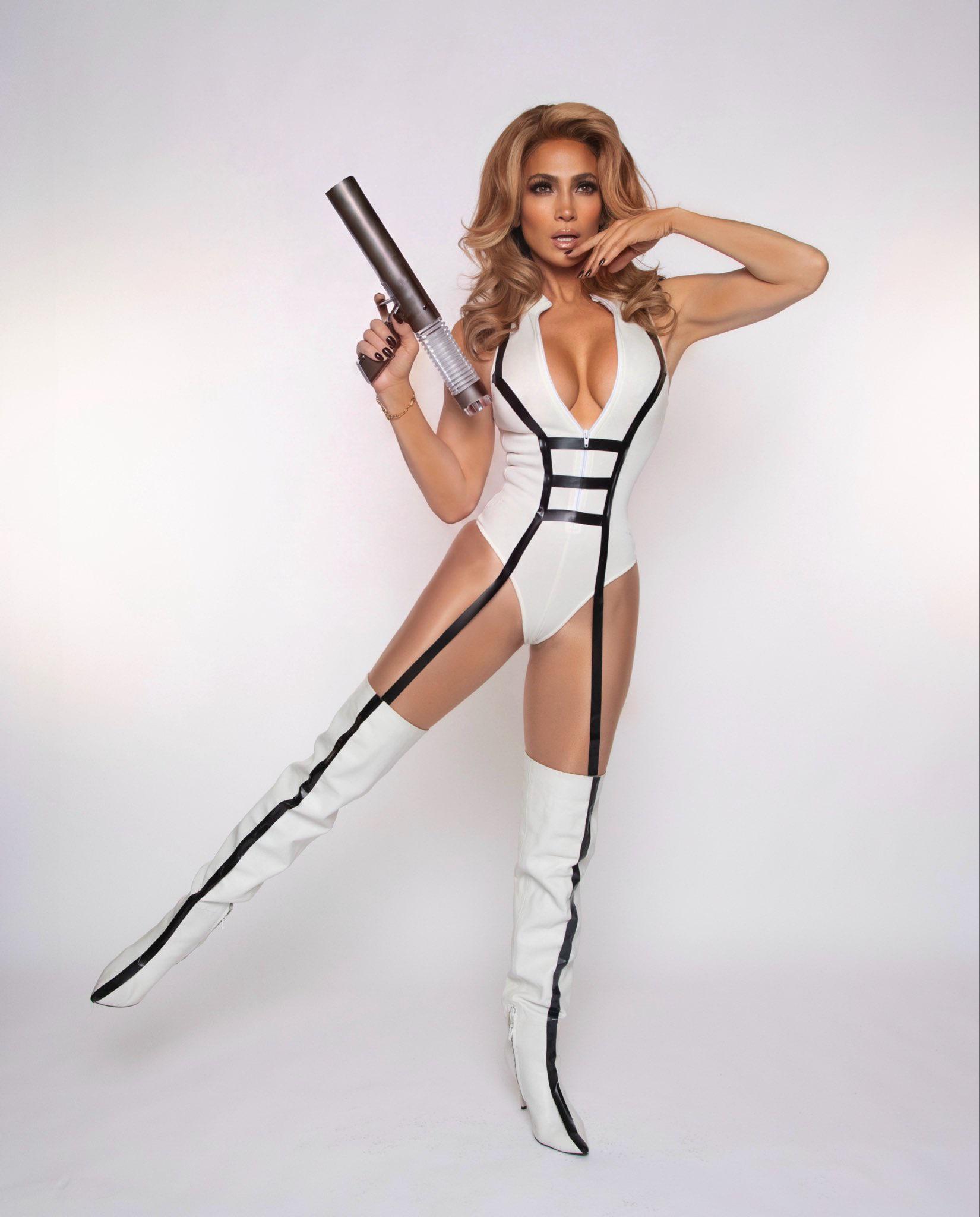
Jennifer Lopez recently turned heads by dressing up as Jane Fonda's iconic character Barbarella for Halloween. The costume, a sleek white bodysuit, has ignited a flurry of reactions, ranging from admiration to critique, and has opened up broader conversations about beauty, aging, and celebrity culture.
The Costume and Its Inspiration
Lopez's choice to channel Barbarella, a character from the 1968 sci-fi film, was met with mixed responses. Some praised the costume for its fun and nostalgic appeal, while others noted its departure from the original crinkly, iridescent fabric that defined the character's look. One observer remarked, 'I like the fabric of this so much better than the smooth white bodysuit that JLo went with. I wish she’d done a full recreation bc this is a fun costume!' Another added, 'her costume doesn’t look like corny late 60s scifi, that's the thing I think.'
Beauty Standards and Aging
A significant portion of the discussion centered on Lopez's appearance and the societal pressures surrounding aging. While many complimented her for looking 'amazing,' others expressed fatigue with the prevalence of flawless, expressionless faces in media. 'She looks amazing but at the same time I’m sick of seeing perfect smooth expressionless faces. I’m 27 and I look older than her,' one person shared. This sentiment was echoed by another, who noted, 'It conditions people to be grossed out by what is natural.'
However, not everyone agreed. One commenter countered, 'No, it does not condition “people” to be grossed out by natural faces, but I can accept it may have conditioned you. Nor does she have to look “realistic” in her photos to appease randoms who may come across her Instagram.' This exchange highlights the complex emotions tied to beauty standards and the role celebrities play in shaping them.
Celebrity Culture and Personal Choices
Lopez's costume also sparked debates about her public image and personal choices. Some defended her right to present herself as she wishes, regardless of whether her appearance is natural or enhanced. 'People are allowed to do that if they want,' one person stated, referring to cosmetic procedures. Another added, 'She doesn’t drink or smoke, she eats super clean. I give her respect for that kind of dedication.'
Yet, others criticized her for what they perceive as a 'desperate' or 'questionable' persona. 'It feels suuuuper desperate to me,' one commenter said, while another noted, 'Because she’s been known to be a mean girl and horrible to people. A shitty personality cancels out looks.' These contrasting views reflect the polarizing nature of celebrity culture and the public's tendency to scrutinize every aspect of a star's life.
The Broader Impact
Beyond the costume itself, the discussion touched on the broader impact of celebrity images on self-esteem and societal norms. 'I never thought celebrities affected me that much but seeing Emilia Clarke at the height of being considered one of the most beautiful women in the world, and noticing she had the same forehead lines I do, was weirdly reassuring,' one person shared. This comment underscores the power of representation and the importance of seeing diverse, authentic images in media.
Final Thoughts
Jennifer Lopez's Barbarella costume has become more than just a Halloween outfit; it’s a catalyst for conversations about beauty, aging, and the pressures of celebrity life. While opinions vary widely, one thing is clear: her choices continue to captivate and provoke thought, whether intentionally or not. As one commenter aptly put it, 'like can this woman just live without people jumping down her throat?' Perhaps, in the end, that’s the most important question of all.